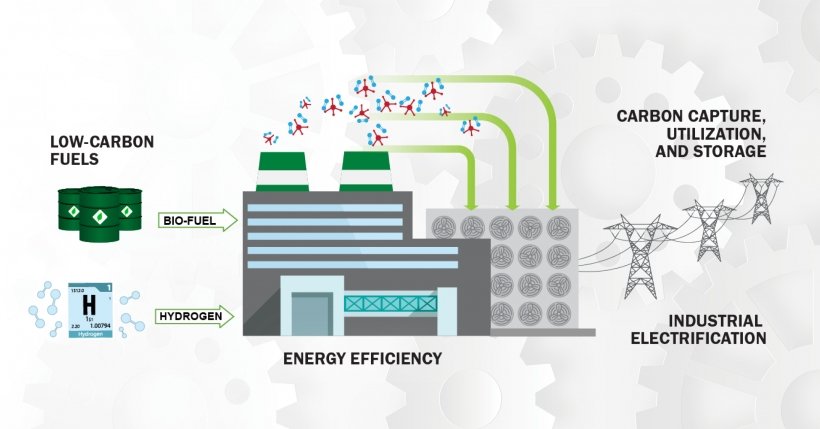
GHG Emissions reduction studies for decarbonization and electrification
Electrification refers to the process of replacing technologies that use fossil fuels (coal, oil, and natural gas) with technologies that use electricity as a source of energy. Depending on the resources used to generate electricity, electrification can potentially reduce carbon dioxide (CO₂) emissions from the transportation, building, and industrial sectors, which account for 65 percent of all US greenhouse gas emissions. Addressing emissions from these sectors is critical to decarbonizing the economy and, ultimately, mitigating the impacts of climate change. This explainer reviews how electrification can reduce emissions; possibilities and potential challenges of electrification in the transportation, building, and industrial sectors; and policy options for encouraging electrification.
The Industrial Decarbonization Roadmap focuses on five of the highest CO2-emitting industries where industrial decarbonization technologies can have the greatest impact across the nation: petroleum refining, chemicals, iron and steel, cement, and food and beverage. These industries represent approximately 51% of energy-related CO2 emissions in the U.S. industrial sector and 15% of U.S. economy-wide total CO2 emissions.
- Chemical manufacturing
- Petroleum refining
- Iron and steel
- Food and beverage
- Cement


.jpg)
.jpg)
.png)